New construction vs. replacement windows: What’s the difference?
Spoiler: Either a new construction window or a replacement window could work in your replacement project. Find out the difference between these types of windows and how to pick the right one.
If you’re trying to understand what makes a window fit for new construction versus replacement, you might be confused, but we’re here to clear it up. Knowing the difference can help you make the right choice for your remodel or replacement project in terms of the scope of the project you’re willing to take on, cost of the windows, and more. It’s within your grasp to understand the difference and it’ll help you avoid regrets later. Let’s get into it.
What is a “new construction” window?
A flanged full-frame window is typically considered a “new construction” window. This type of window comes with a frame and a nailing flange around it, which means it’s ideally suited for any project where the siding or trim are yet to be added. A window like this works well in new construction homes and in any remodeling or replacement project where it’s possible to peel back the siding or remove and reapply exterior trim.
One fundamental aspect of properly installing a window is connecting it with the systems that keep water and air from entering the home. The nailing flange makes a new construction window easy to seal and flash, which helps keep the elements out.
What is a “replacement” window?
There are several different types of “replacement” windows, including insert windows and flangeless full-frame windows. Both of these windows are designed to fit where a window is already located.
- An insert replacement window is one that fits inside the existing window frame, so only the old sash is removed (the sash is the glass and framing around it). This type of replacement window works when your frame is in good condition.
- A flangeless full-frame window is one that is designed to fit into the existing rough opening after the old window and its frame are removed. This type of replacement window works when you decide to remove the old frame, but you don’t want to disturb your siding or trim.
Confusingly, a flanged full-frame window, the one that's casually called a "new construction" window, can also be used for replacement. This type of window works when you're able to remove or peel back your exterior siding and/or replace your exterior trim. It’s the ideal option when you are changing your rough opening or adding a new rough opening, for example, in a major remodel.
New construction vs. replacement windows: a side-by-side comparison
Let’s line up the differences so you can really see what differentiates these windows.
| Window type | Pros | Cons | What else to consider | Products to consider |
|---|---|---|---|---|
| A flanged full-frame window has a nailing flange and is typically installed before the siding. | The nailing flange smooths install, making it faster and easier to connect with control layers. This is how pros describe the systems used to keep the elements out of your home. | In a replacement, this type of installation is generally the most invasive and costly. The window itself will be more expensive than an insert replacement, for example, and the installation process will require more steps, so more labor, time, and money. | In a major remodel or new construction home when new window openings are being built, a flanged full-frame window is actually the easiest to install. This is because of the nailing fin. | Windows from any series can be ordered as flanged full-frame units. |
| A flangeless full-frame replacement window comes with a new frame. | Compared to an insert replacement, this option will maximize daylight. It offers the opportunity to fix air and water issues as it’s not relying on the existing systems, like an insert. Install isn't dependent on removing siding and trim. | Compared to an insert, it’s a more invasive and expensive installation — though typically less so than a flanged full-frame window. The unit itself and the steps required to install and finish will require more labor, time, and money than an insert replacement. | In a replacement project where you have concerns about air and water leakage with the existing frame, this is a better option than an insert. | Windows from any product line, except 200 Series, can be ordered as flangeless full-frame units. |
| An insert replacement window fits into the existing frame. | This is the least disruptive window replacement option. It allows you to preserve your trim and siding. It’s also the least costly option, both the window unit itself and the time and labor required to complete the project. | Certain conditions must be in place for this option to work, including, crucially, the existing frame must be structurally sound. If there are underlying air or water leakage issues that you aren’t aware of, this replacement will not improve conditions because it relies on existing systems to manage these elements. By fitting the new window into the existing frame, you are narrowing your aperture and reducing daylight. | Not all window types work well as inserts because of the geometry involved. One watchout is that it can be challenging to fit a casement insert into an old casement frame — typically a flangeless full-frame window is better. Double-hung and gliding windows are both good options when using an insert. | Insert replacement units can be ordered through our 100 Series product line. Our 400 Series Woodwright® Double-Hung and our 400 Series Tilt-Wash Double-Hung can also be ordered as insert units. Finally, there’s a special stucco-specific insert replacement unit available in select locations, our 100 Series Flush Fin Replacement window. |
Wondering where Renewal by Andersen’s custom manufactured replacement windows fit in? They are engineered to be installed as either full-frame or insert windows, depending on the circumstances. Find out the difference between Andersen and Renewal by Andersen.
What is a nailing fin?
A nailing fin can also be called a nailing flange or installation flange. On our Andersen® windows, you’ll recognize it as the vinyl strip that lines the perimeter of all flanged full-frame windows (aka new construction windows). A nailing fin projects beyond the frame and has pre-punched holes that are used to install the window and help protect against water leaking into the home.
This feature isn’t included on flangeless full-frame windows or insert windows because those windows are designed as replacement windows, which can be installed without removing the siding. Whereas a flanged full-frame window is designed to be installed before the siding or exterior trim.
What’s the difference between flangeless full-frame replacement and “new construction” windows (flanged full-frame)?
The flange, also called a nailing fin, is the biggest difference between a flanged full-frame window (“new construction” window) and a flangeless full-frame replacement window. The flange, or nailing fin, dictates how the window will be installed. Flanged full-frame windows must either be installed before the siding, which would be the case in a new construction or major remodel, or else the siding and trim must be peeled back, which would be the case in a replacement scenario.
In a replacement scenario, you might be trying to decide between a flanged full-frame and a flangeless full-frame window. Here’s how to pick between the two.
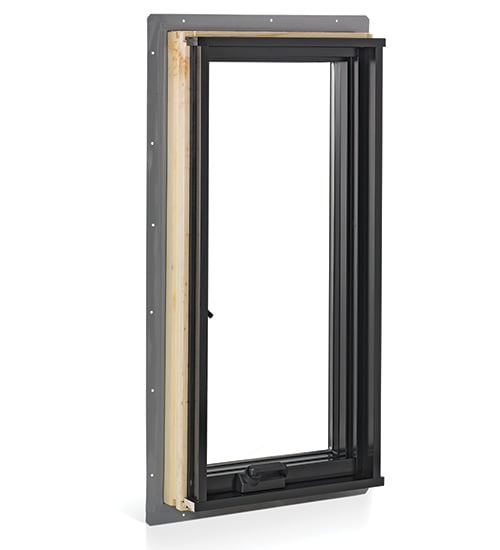
Pick a flanged full-frame window when:
- Are you undertaking a major remodel that involves changing your rough openings or removing your exterior siding or trim? This option can be installed quickly and connects easily to control layers thanks to the nailing fin.
- Are you experiencing air or water leakage? These issues can be addressed prior to installation, and the window performance will be optimized.
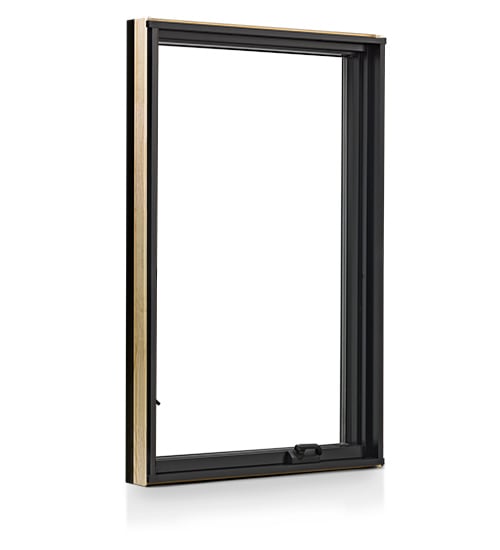
Pick a flangeless full-frame window when:
- Are you seeking minimal disruption? The project is less complex.
- Are you replacing only a few windows? You can keep your existing trim for a better match with the windows you won’t be replacing.
What determines window prices?
The price of a window unit itself is determined by various factors, including the materials, size, customization, and more, but it’s also important to keep in mind that the price of the window is only part of the project’s cost. Here’s a closer look at the costs you might encounter in a window replacement project:
Windows
When comparing the cost of the three types of windows discussed here. Insert replacement windows are the least expensive because they rely on the existing frame, so they’re simpler to produce. Product complexity only increases with flangeless full-frame and flanged full-frame windows. As the products become more complex, they require more resources to make in terms of materials, design, and assembly.
Installation
Installation costs are sometimes unclear, which is why it’s an important question to ask your contractor— get our full list of questions to ask. Generally, the costs that fall under replacement will include labor, materials, permitting, and disposal fees. The best way to fully understand the answer to this question is to request a bid. The bid should detail all that’s included. If you’re ready to start this process, we can help you find a contractor who’s local to you and specializes in Andersen products.
Finishing
In a replacement project, you’re opening a hole in the wall, which could necessitate finishing work such as repairing or replacing trim and siding, repainting, and more. The work required will depend on the type of window you’ve chosen. The disruption to your home could be minimal, or it could be more significant. An insert replacement window is the least disruptive option. However, anytime you open up a wall, there’s a chance you could uncover another problem. For example, it’s not uncommon to find rot under windows or doors, which could necessitate a more extensive repair that needs to be addressed prior to installation.
How to choose?
One of the reasons we recommend working with an experienced contractor who specializes in window and door replacement, rather than DIY, is because assessment is the key to a successful window replacement. A proper assessment of the project will look at the physical condition and the placement of the old windows in the building envelope while also taking your aesthetic preferences into consideration.
Here’s what we mean:
